
In the past, individuals had to visit a doctor or clinic for regular check-ups and tests. Now, wearables can continuously monitor various health metrics, offering real-time data that can be used for early detection of potential health issues. These devices can monitor a range of physical activities, from walking and running to swimming and cycling. They use a variety of sensors, including accelerometers, gyroscopes, and heart rate monitors, to gather data about your movements, speed, and intensity. But wearables today do much more than count steps—they provide a detailed and nuanced understanding of your physical performance. They are complimentary devices to your smartphones, like the Apple Watch or Samsung Galaxy Watch, monitoring your heart rate, tracking your workouts and even reminding you to get up and move if you’ve been sitting for too long.
Beyond the Dashboard: How Wearable Data Is Building a New Health Economy
Advanced BP monitors collect electrocardiography data cuff-free and use machine-learning algorithms to analyze readings to help detect hypertension early. Sophisticated wearable diabetic glucose readers can regularly record blood glucose levels in the tissue without pricking. They can stay on for 1-2 weeks and gather enormous amounts of data to prevent hyperglycemic and hypoglycemic events.
The context of the user varied considerably across the 14 studies that used this type of information in our review. This category included user preferences, social media profile, location, time, mood, and energy levels among others. In another study [64], the recommended activities were restricted to standing or walking.
Social Motivation and Virtual Coaching
- Apps like Walking Yoga and Nord Pilates are helping people integrate intentional, low-impact movement into everyday life, with structure, support, and results.
- A survey of tailoring techniques used in real-time PA coaching systems published before August 2013 is presented in the study by op den Akker et al [17].
- Given Emily’s goal of improving mental health and increasing flexibility, incorporating practices such as yoga, meditation, and low-intensity cardio exercise such as walking, or cycling can be highly beneficial.
- A study that personalized messages using reinforcement learning concluded that the difference in users’ exercise on a given day could be learnt by the learning algorithm, thus making user behavior predictable [9].
- Aerobic exercises, for instance, are known to promote endorphin release, aiding in mood improvement [58], while strength training can boost self-esteem and body image, providing an additional mental health benefit [59].
- This fitness system is just one of the several offered by Speediance and is billed as a “the mighty home gym.”…
Increases accessibility regardless of location barriers, allowing preventive care, fast patient recovery and optimized performance. As technology and science progress, accepting technology in health care is vital for sustaining service efficiency, optimized care and shaping a future of patient centered healthcare and fitness. However, the ethical implications of collecting and using sensitive user data must be carefully considered. Data privacy and security are paramount, requiring robust measures to protect user information from unauthorized access and misuse. Transparent data handling practices and user consent are essential to maintaining trust and ensuring the responsible use of AI in fitness technology. As AI continues to revolutionize the fitness industry, it is crucial to prioritize user privacy and security to ensure that the benefits of personalized fitness are realized without compromising individual rights.
Unlock Your Fat Burning Potential: Mastering Cardio Zones!

Likewise, AI can accelerate research on biohacking strategies and help the community discover safer and more effective approaches to improve their health, performance and overall well-being. AI systems also track gym equipment usage and predict maintenance needs, reducing downtime and ensuring that machines remain in top condition. For gym owners, these insights translate into cost savings and enhanced member satisfaction. AI systems help schedule classes, optimize attendance and allocate resources effectively. By analyzing usage patterns, gyms can offer better services and avoid overbooking or underutilizing facilities. Generative AI engines can provide nutritional advice, although they’re more of a tool than a total replacement for human dietitians.
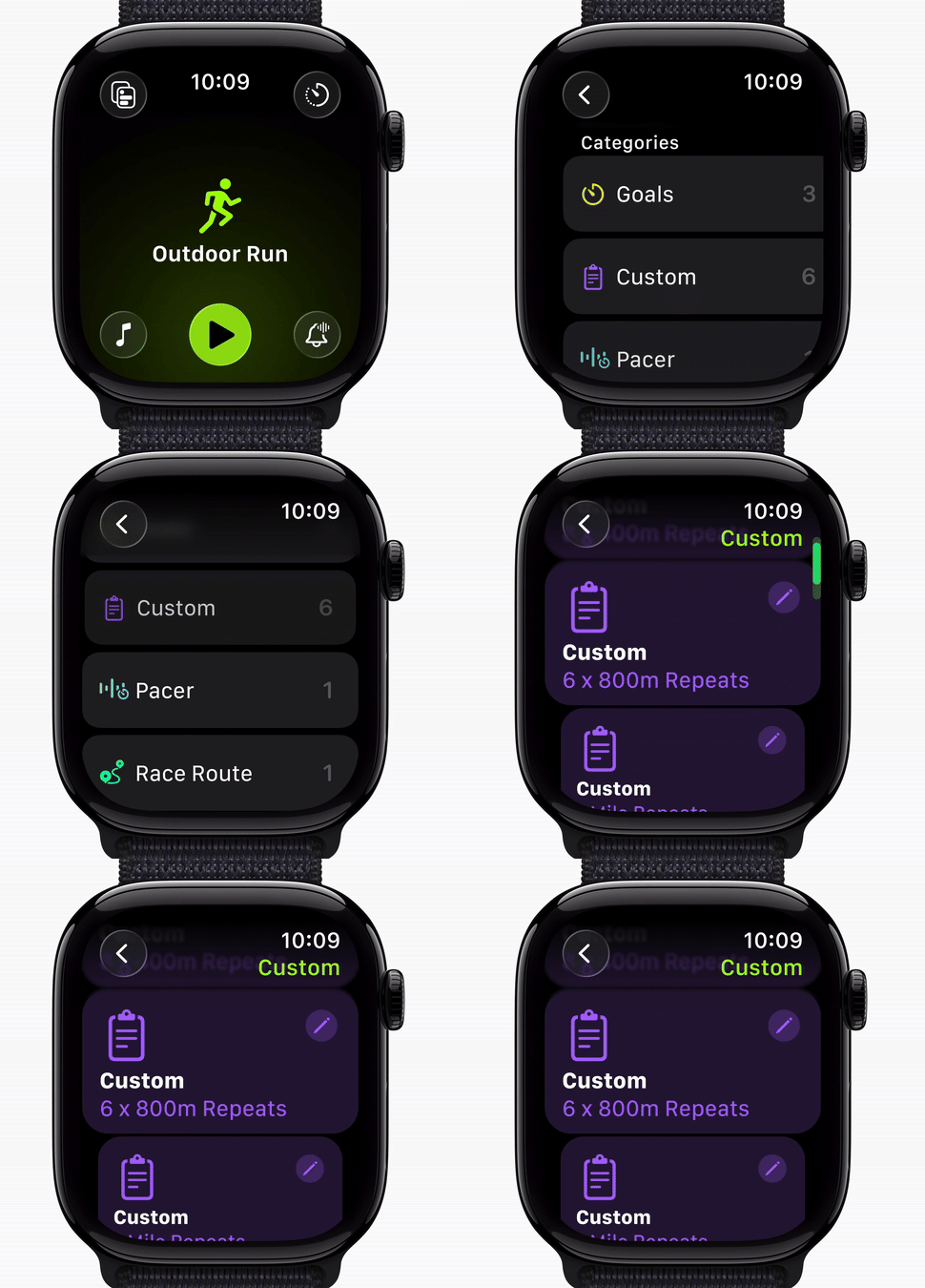
How Fitness Technology is Transforming Exercise: 6 Innovative Uses
Enter personalized fitness programs, an innovative approach that tailors workouts to individual goals, preferences, and lifestyles. By leveraging technology, expert insights, and personal data, personalized fitness empowers individuals to achieve sustainable health and wellness. Technology is transforming the fitness landscape, making workouts more efficient, engaging, and personalized.
The Rise of AI in Personalized Fitness Coaching
Businesses are leveraging the new tech to optimise their fitness offerings, this spotlights rapid digitising within the industry triggered by the need to personalise products and services. 2022 brought a pivotal shift to the wellness industry, revolutionising our approach to health and fitness. With a global market valuation of US$1.5 trillion, it continues to expand, delivering “multiple dimensions of wellbeing,” from maintaining an active lifestyle and healthy eating, to sound sleeping and practising mindfulness. With AI constantly improving and becoming more popular, the world of AI-enabled fitness apps will likely only grow. If developers can solve the inherent challenges of AI, while maintaining and improving the functions of these apps that users already know and love, there is no limit to what AI-enabled fitness apps can do in the future.
Overview of Studies
Artificial intelligence has found its way into nearly every industry, and fitness is no exception. From gyms to at-home training, AI is reshaping how people approach health and wellness. With its ability to process vast amounts of data and make smart predictions, AI is helping fitness become more personalized, efficient, and accessible than ever before. The fitness industry holds a wealth of sensitive personal information, making it an attractive target for cyberattacks, and proactive security measures are vital for safeguarding user data. The potential for algorithmic bias, discriminatory practices, and unintended consequences should be addressed proactively.
Interventions
Finally, there are some individuals that will need the continuous presence of a coach next to them to exercise [80, 81], and for these persons AI may never provide an adequate solution. This study has explored the application of the GPT-4 model for personalised exercise prescription for five-example patient profiles with various health conditions. The GPT model’s responses were able to produce generally safe exercise programs grounded in the general FITT principles and RPE guidelines, demonstrating the potential utility of AI in generating basic exercise recommendations.
Whether you’re a weekend warrior, a gym rat, or just getting started on your wellness journey, AI-powered wearables are helping tailor your fitness experience like never before. Let’s explore how this exciting shift is making your health journey smarter, more efficient, and deeply personal. The fitness industry is entering 2026 with unprecedented momentum, driven by evidence-based insights, cutting-edge technology, and a renewed focus on sustainable health outcomes.
Health & Wellness
In our review, only 27 studies presented evaluations of their proposed interventions for PA. The remaining 12 studies have not shown statistically significant results or shown no improvement at all. The impact and extent of the results vary in the studies as all are not randomized controlled trials (RCTs) and do not try to address similar questions.
Wearable Technology
Machine learning, a cornerstone of AI, plays a pivotal role in tailoring workout routines, nutrition plans, and ladder training app recovery strategies. The fitness industry is undergoing a seismic shift, driven by the transformative power of artificial intelligence. MHealth and its innovations align with a broader shift in health care from reactive treatment to preventive care. By leveraging the “Internet of Health Things” like wearables, apps, AI and VR/AR, health professionals can proactively monitor and optimize clients’ physical activity and overall well-being.
For a long time, movement tracking was only available in smart wearables because computer vision wasn’t advanced enough to provide real-time tracking. Today, AI-based human pose estimation technology has allowed the analysis of the position of a body based on visual input without wearables. This can be used in a number of applications such as movement analytics apps that help athletes improve performance in specific movements. Human pose estimation would, for example, perform real-time analysis of users’ exercise recordings and provide suggestions on how to improve exercise form and biomechanics.. Injury prevention tools now integrate seamlessly into wearables, offering real-time feedback during workouts.
The activity monitor provided visual feedback (blinks on the monitor) to the user when the target goal was achieved or if their HR exceeded the target. Another exciting development is the possibility of wearables becoming a key tool in the management of long-term, complex conditions like Parkinson’s disease, diabetes, and even cancer. While FitTech offers numerous benefits, including convenience and motivation, it also presents challenges. Privacy concerns regarding the collection and use of personal health data remain a significant issue. Additionally, the reliance on technology may detract from the natural enjoyment of physical activity for some individuals.
As you do your workouts, the coach will adjust your workout plans based on real-time data and insights in order to help you meet your goals. As technology continues to evolve, our workouts will become more personalized, efficient, and enjoyable. From AI-powered personal trainers to VR workouts, wearable tech, and smart gym equipment, the possibilities are endless. Fitness technology will not only help us train smarter but also live healthier, more balanced lives. Creating a supplementary exercise program with technology can be a great way to crush existing fitness goals, whether to lose weight, increase muscle mass, or achieve a healthier lifestyle.
Recent Comments